Loading…
Serving Encinitas, CA and surrounding areas. (760) 274-8669
Sandy soils and canyon-edge lots need more than a good-looking wall. Get proper drainage, deep footings, and a city-permitted structure that holds through every rainy season.
Concrete retaining walls in Encinitas involve excavating a footing trench, installing deep footings suited to local sandy or decomposed-granite soils, building the wall with reinforcing steel where required by height, and installing drainage behind the wall to prevent water pressure from building up - most residential projects run two to five days from start to finish.
Many homeowners we work with come to us after noticing soil movement on a sloped lot, a leaning or cracked existing wall, or erosion that gets worse each rainy season. Concrete retaining walls in Encinitas are often structural necessities, not just landscaping upgrades - especially on canyon-edge and hillside lots. If your project involves creating level outdoor areas, our concrete floor installation service pairs well with a tiered wall system.
The City of Encinitas requires permits for walls above certain height thresholds - and canyon-adjacent properties often trigger additional review. We handle the permit application from start to finish so the work is properly inspected and on record.
After a winter storm, walk your sloped areas. If you see displaced soil, small landslide ridges, or ground that has settled unevenly, your slope is actively eroding. In Encinitas, sandy soils on canyon-edge lots tend to get worse each rainy season without a wall in place.
A retaining wall that tilts forward, shows wide cracks, or has gaps forming between the wall and the soil behind it is under more pressure than it can handle. This is a safety issue - a wall that has started to move will eventually fail, and the soil behind it goes with it.
If standing water collects at the bottom of a hillside or along your foundation after rain, that water is carrying soil with it every time. Over seasons, this erodes the base of your slope and can push moisture toward your foundation. A properly drained retaining wall redirects that water safely away.
Many Encinitas lots - especially in hillside neighborhoods near the coast or canyon areas - are too steep to use without grading. If your backyard is essentially a hill you cannot put furniture on, a tiered retaining wall system can create flat, functional outdoor space where there currently is none.
We handle the full project: site assessment, permit application with the City of Encinitas, excavation, footing installation, wall construction with reinforcing steel where required, and drainage layer installation behind the wall. Standard walls under four feet are straightforward. Taller walls need deeper footings, rebar throughout, and sometimes a city-required engineering review - we scope all of that into your written estimate before any work begins. For homeowners who want to complement a new wall with improved outdoor living surfaces, we also offer concrete footings for adjacent structures and attached buildings.
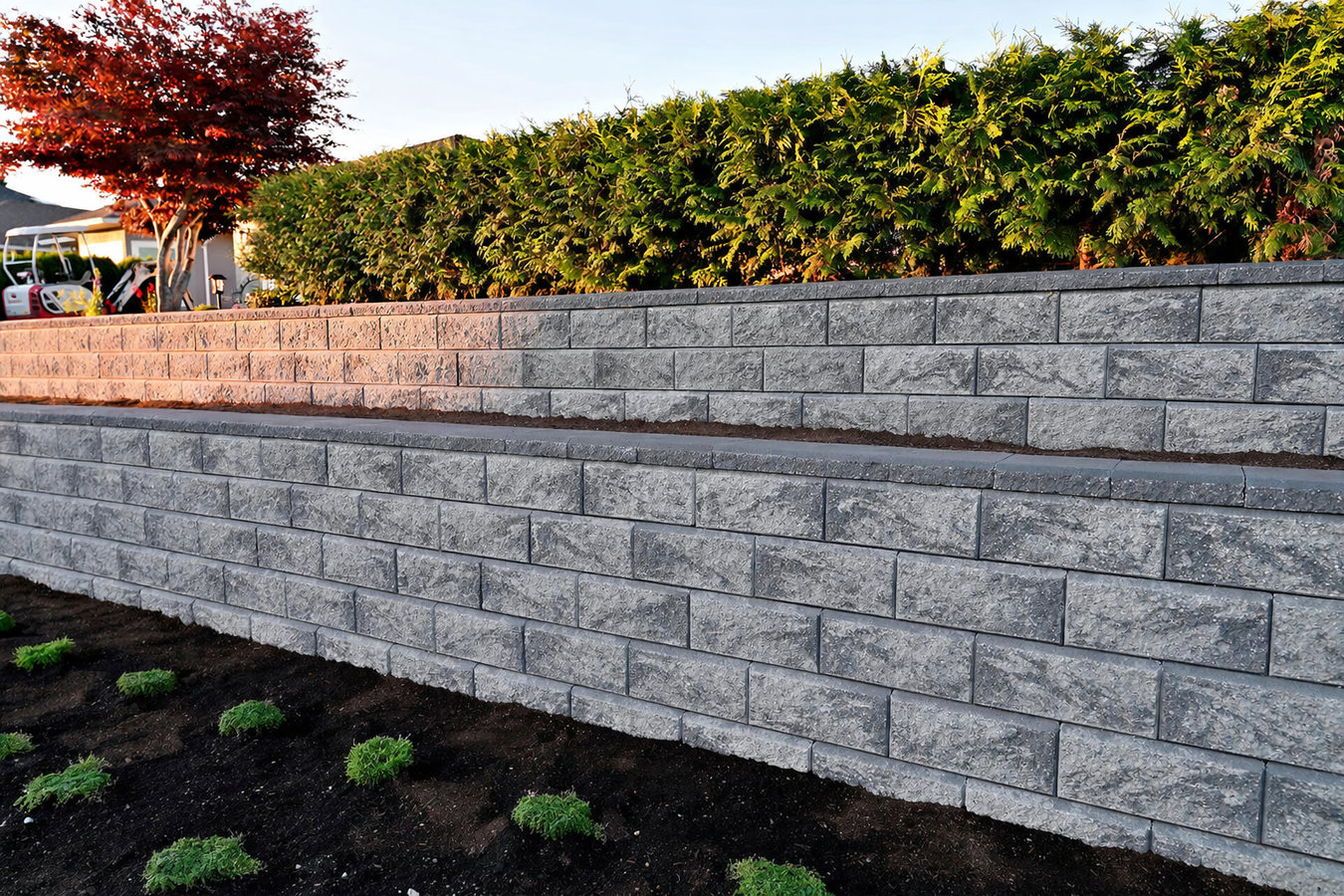
Finish options include plain formed concrete, exposed aggregate, and textured block-style surfaces that work with HOA design guidelines common in communities like Olivenhain and Leucadia. Every wall gets a drainage layer - gravel backfill and a perforated pipe - that carries water away from the wall instead of letting it build up pressure from behind. Skipping drainage is the number one reason retaining walls fail early, and we do not skip it.
Cast-in-place construction for maximum strength on canyon-edge lots and tall walls needing deep footings.
Multiple shorter walls that step up a slope, creating flat usable terraces from steep hillside properties.
Segmental block systems suited to moderate slopes where aesthetics and HOA compliance both matter.
A significant portion of Encinitas sits on canyon rims, coastal bluffs, or steeply graded hillsides where soil erosion is an active concern - not a hypothetical one. The area's sandy and decomposed-granite-type soils drain quickly but do not hold together well when wet or disturbed, which means footings here need to anchor into stable ground well below the surface. We factor local soil conditions into every retaining wall design, and we pull permits through City of Encinitas Development Services as a standard part of every project - not an optional add-on.
Encinitas also has active HOA communities in neighborhoods like Olivenhain and Leucadia that maintain design standards for wall height and finish. We ask about HOA requirements at the start so your wall satisfies both the city and your association without multiple rounds of revision. We regularly serve hillside homeowners in Vista and San Marcos where similar canyon-edge conditions and sandy soils apply.
We reply within 1 business day and schedule a free on-site visit. No phone-only quotes - a retaining wall estimate is only reliable after we see your slope, soil conditions, and access situation in person.
We measure the slope, check soil type, assess drainage paths, and note any access challenges. You receive a detailed written estimate covering labor, materials, and permit fees - the number you agree to is the number you pay.
We submit the permit application to the City of Encinitas on your behalf. Review timelines vary, but we give you a realistic estimate and a confirmed start date once approved. Use the waiting period to clear the work area.
Excavation and footing work come first. The wall and drainage layer follow over one to two days. After city inspection, the area is backfilled and cleaned up. Concrete needs about a week before the wall is loaded with heavy soil.
We respond within 1 business day - no obligation, no pressure. Someone from our office will call to schedule your free on-site estimate at a time that works for you.
(760) 274-8669We work regularly on the canyon-edge and coastal bluff properties that make up a large share of Encinitas hillside lots. That means we know which soil conditions require deeper footings, which sites need engineering review before permits, and how to design drainage that actually performs after winter storms.
Poor drainage behind a retaining wall is the most common reason walls fail before their time. Gravel backfill and a perforated drainage pipe are standard on every wall we build - not an upsell. The American Concrete Institute recommends this as a baseline for any permanent retaining structure. See guidance at{" "}concrete.org.
We have pulled permits through City of Encinitas Development Services and neighboring city building departments across the service area. That process is part of your project cost from day one - no surprises and no risk of unpermitted work flagged at your next home sale.
Communities like Olivenhain and Leucadia have HOA design guidelines covering wall height, finish, and sometimes color. We ask about your HOA requirements at the first meeting and design to those standards so you are not revising plans after you have already invested in the design.
Every retaining wall we build is designed to last decades - with drainage that works, footings deep enough for local soil conditions, and a city inspection sign-off that documents the work was done right. That is the standard we hold ourselves to on every job, from small garden walls to large canyon-edge structures.
Pour a new concrete floor for a garage, ADU, or outdoor living space that complements your finished retaining wall project.
Learn moreSolid footings for fences, posts, and structures adjacent to your new retaining wall - designed for Encinitas soil conditions.
Learn moreEncinitas's rainy season starts in November - schedule your retaining wall project now while crews are available and the ground is dry for excavation.